Support-A-Girl
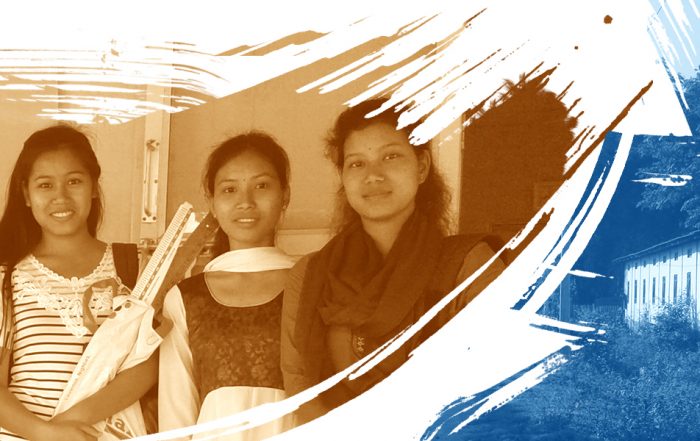
Keeps her in school and safe — covering tuition, uniforms, books and a nourishing meal, paired with mentors who work with her family when pressure builds to withdraw her early.

Empowering underprivileged Girls and Women


Our Mission
Our mission is to give every underprivileged girl and woman in India the same opportunity as anyone else — to learn, to earn, and to decide her own future, regardless of the poverty or the gender bias she was born into.
We believe opportunity is a right, not a privilege reserved for those born into it. When a girl is pulled from school because her family cannot afford it, or because she is a daughter and not a son, that is not fate. It is a failure — and it is the one Sneha Karma Foundation exists to correct.
But belief alone is not enough — to change a girl’s future, we have to understand exactly what stands in her way.
Two Root Causes
Across rural India, the obstacles a girl faces rarely arrive one at a time. Nearly all of them trace back to two forces acting together — and it’s the combination, not either one alone, that does the damage.
Left unaddressed, these two causes follow a well-worn chain: a girl pulled from school is easier to marry off early; a girl married young is more likely to remain illiterate for life; an isolated, unschooled girl is the easiest to exploit. Each effect below is both a result of the causes above and a cause of the next.
Cause 1
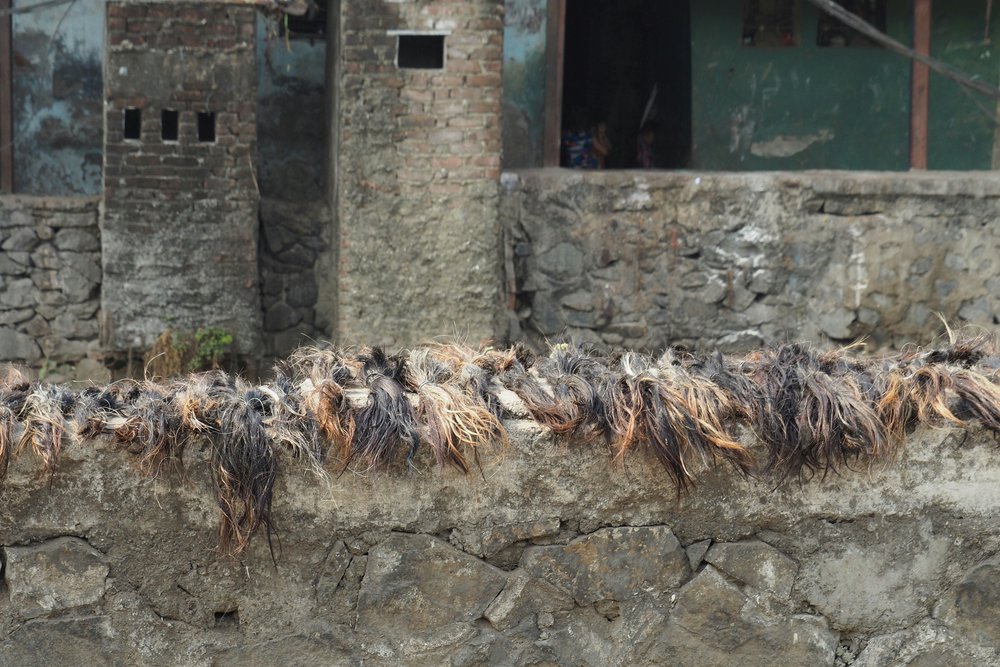
Almost 22% of India’s population lives below the official poverty line. In families fighting simply to survive, it is almost always the girl who loses out first: when money is short she is pulled from school, kept home for chores, or sent out to work, while her brothers are fed, clothed and educated before her. Poverty is not gender-neutral — it takes an existing bias against daughters and makes it visible and cruel. Because her earning potential is dismissed from the start, the income she might have earned is never realized, and the cycle passes to the next generation.
Cause 2
It begins before a girl is born, in a society that treats a son’s arrival as cause for celebration and a daughter’s as a burden. It shapes every decision made about her afterward: educating a son is seen as an investment, educating a daughter is often seen as a cost, because she will “marry and leave.” The result is a literacy gap that persists into adulthood — as of 2011, 82% of Indian men could read and write, against 65% of women aged seven and older. This is the belief Sneha Karma Foundation exists to change.
Our Challenge
Poverty and gender bias don’t operate side by side — they compound each other. A poor family is more likely to act on gender bias when resources are scarce; a girl who is already devalued has less claim on what little the family has. That is why we treat both as the same fight, not two separate ones.
Effect 01
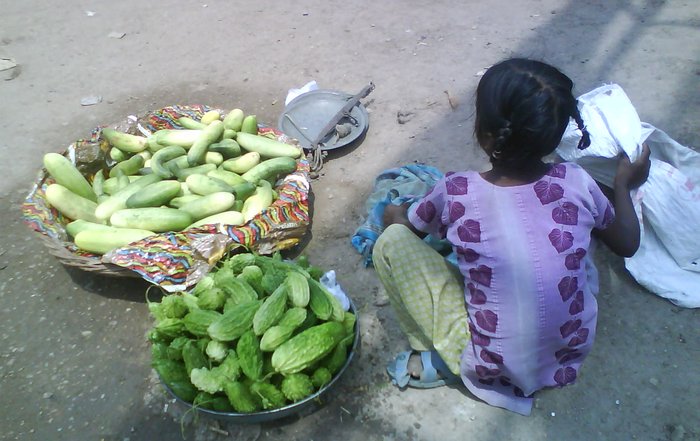
Education lifts people out of poverty and promotes equality — yet for a girl in rural India, going to school is often the exception, not the rule. Education is seen as an investment only in sons: a boy is prepared to become the future earner, while a girl is prepared to marry into another house. In poor households she is kept home to help with chores, because learning household work is thought to raise her value in the marriage market.
Distance, safety and facilities close the door further. Rural schools often lack quality teaching, female teachers, electricity and basic facilities, and children may have to travel miles to reach them — for a daughter, fear for her safety on the journey becomes one more reason to keep her home. Many schools have no working toilets, and many girls have no access to sanitary pads, so after puberty they begin staying home during their periods and eventually drop out altogether.
The scale is staggering. According to UNICEF, about 40% of children aged 6 to 14 in India never complete elementary education, and a UNESCO study found 47 million adolescents who have not progressed to upper secondary school — the highest number in the world. Girls, especially from Dalit and tribal communities, are the most likely to be left behind.
Effect 02
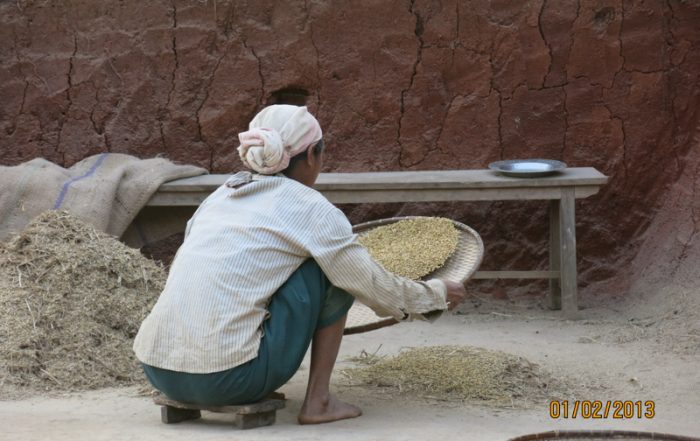
A girl who is pulled out of school does not simply pause her education — she often loses it for good. The gap persists into adulthood and passes to the next generation. On 2011 data, 82% of Indian men but only 65% of women aged seven and above could read and write, and the gap is widest among the poorest families and in rural communities.
Illiteracy is rarely only about reading. A woman who cannot read struggles with a medicine label, a bank form, a government notice or a bus timetable. She cannot help her own children with their homework, so they are more likely to struggle in school too — and the cycle repeats. She is far more likely to be excluded from decisions about her household, her land and her money, because documents and forms are closed to her. She is also easier to cheat and easier to keep dependent.
For a girl, literacy is the difference between being spoken for and speaking for herself. The reverse is equally powerful: an educated mother is far more likely to send her own daughters to school, which is how the cycle of illiteracy is finally broken. Keeping girls in school is not only about their own futures — it is the single most reliable way to end illiteracy in the generation that follows.
Effect 03
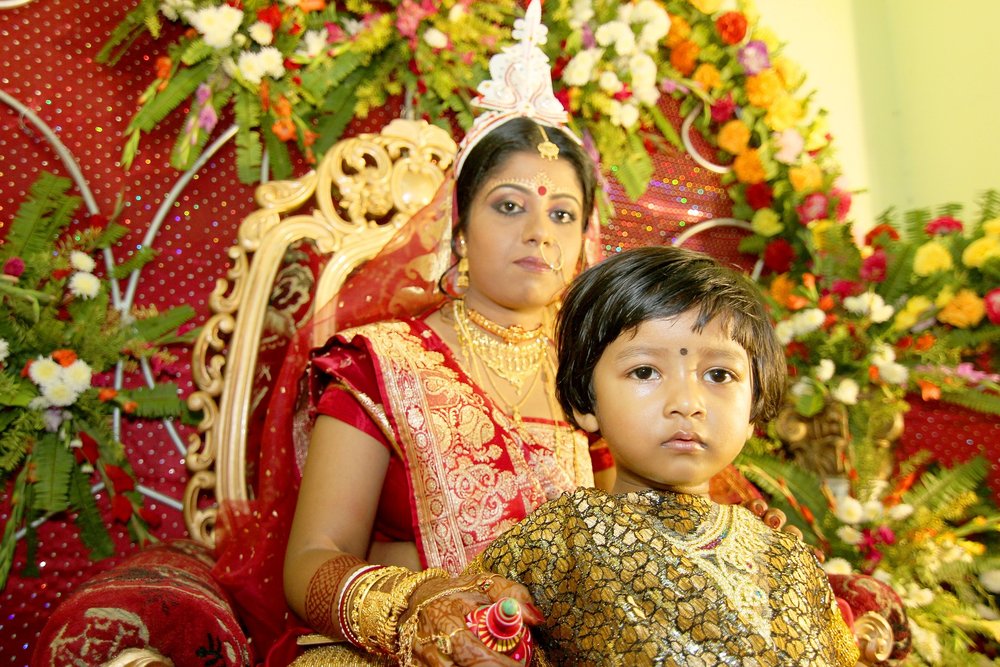
Child marriage is one of the most common ways a girl’s childhood ends. More than half of girls from the poorest families in the developing world are married as children, and a girl from a poor family is more than three times as likely to marry before 18 as a girl from a wealthier family. Where a daughter costs dowry and brings in no income, marrying her off early is treated as reducing the family’s burden.
The drivers are the causes above. Dowry makes a daughter look like a financial liability, and marriage — however young — is seen as ending that liability. Poverty makes it worse: a daughter is one less mouth to feed, and economic desperation makes families more willing to give a girl away. Misplaced social beliefs complete the picture: a girl is expected to belong to her husband’s household, so her own education and choices are not considered important.
What a child bride loses is everything that follows — her school years, her health, her choices and her chance to become her own person. A girl married young is more likely to drop out of school, to suffer poor health and to be powerless to change her circumstances. The reverse is also true: when a girl stays in school she is far less likely to be married as a child.
Effect 04
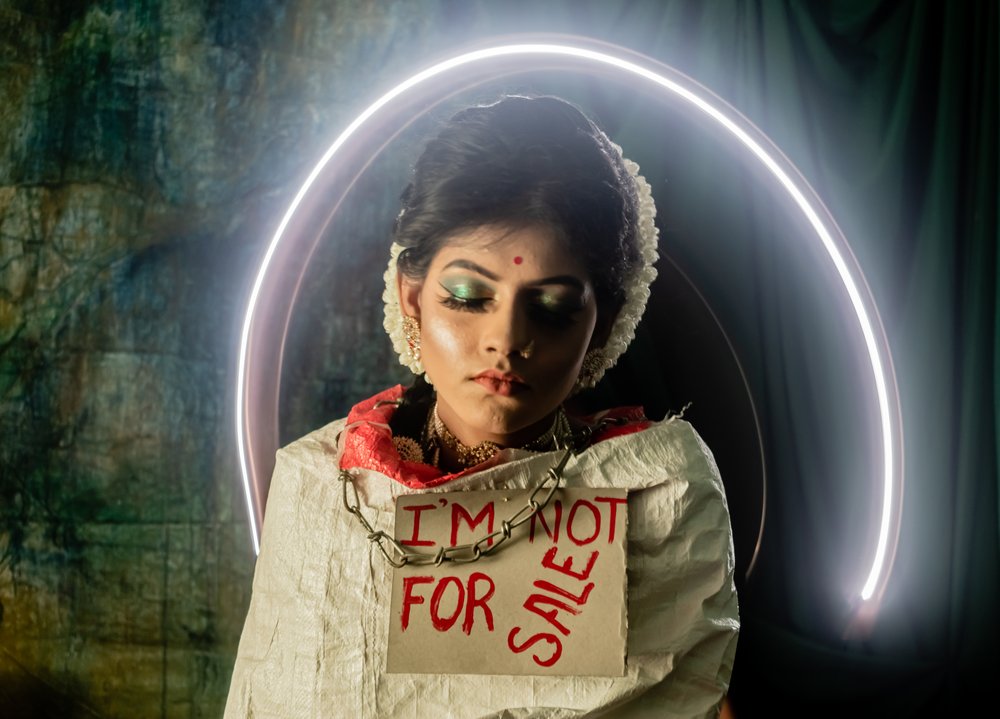
Child trafficking is modern slavery — the recruitment, transportation or harbouring of children through force, coercion or deception for the purpose of exploiting them. It is a highly lucrative criminal industry, second only to drug trafficking. Girls are disproportionately its victims, because a society that devalues girls creates exactly what traffickers depend on: desperation and invisibility.
Poverty makes families vulnerable; some give a child away for financial relief, and the coercion is often subtle, working within families and communities whose economic position leaves them few options. The devaluation of girls makes the crime easier still: where a girl is seen as less valuable, her disappearance matters less, and a girl who is out of school, unskilled and socially isolated is the easiest to exploit. Exploitation takes many forms, from domestic servitude and field, factory or child labour to sex trafficking and even bridal and reproductive slavery.
Trafficking is the extreme end of the cycle described on this page — what happens when every protection around a girl has already failed. Prevention therefore begins with the very things traffickers rely on a girl lacking: an education, a skill, a voice and a community that values her.

Effect 05
Social abuse is the quieter, everyday end of the same chain: the violence and exploitation a girl faces inside her home and community. It includes domestic violence, emotional and physical abuse, harassment, and discrimination treated as normal because a girl is believed to be worth less. Where gender inequality is the norm, abuse is often hidden behind tradition and dismissed as a private family matter.
Poverty deepens it. A family under economic stress is more likely to push a daughter into work, into marriage or into situations where she has no power, and is less able to protect her when someone harms her. A girl who is out of school is also out of sight — she has fewer trusted adults around her, fewer places to turn and fewer people who notice when something is wrong. Abuse rarely announces itself; it grows in isolation and silence.
The effects are lifelong: poorer health, interrupted education, low confidence, and a far greater risk of the other harms on this page. Protecting a girl therefore means ending her isolation. Education, mentorship and a community that values her are not only opportunities — they are protection.
Our Approach
Because poverty and gender bias reinforce each other, addressing only one leaves the other to undo the progress. So our work runs on two tracks at once: giving each girl the education, skills and income to stand on her own, and gently shifting what her family and community expect for her in the first place. Three connected programs carry that out:
Keeps her in school and safe — covering tuition, uniforms, books and a nourishing meal, paired with mentors who work with her family when pressure builds to withdraw her early.
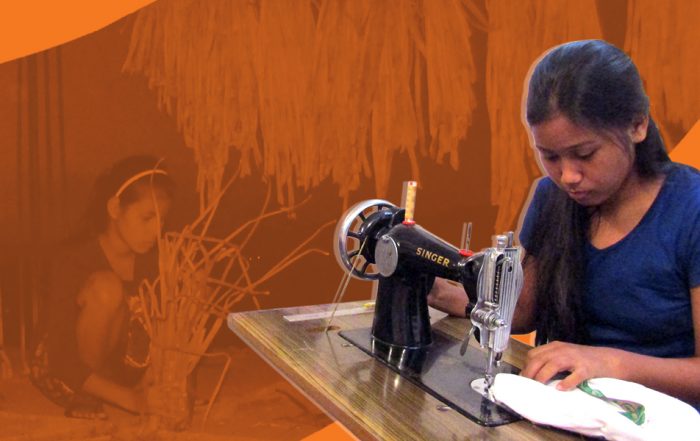
Turns that education into employability once she’s ready for it — vocational training, computer literacy and apprenticeships matched to what employers actually need.
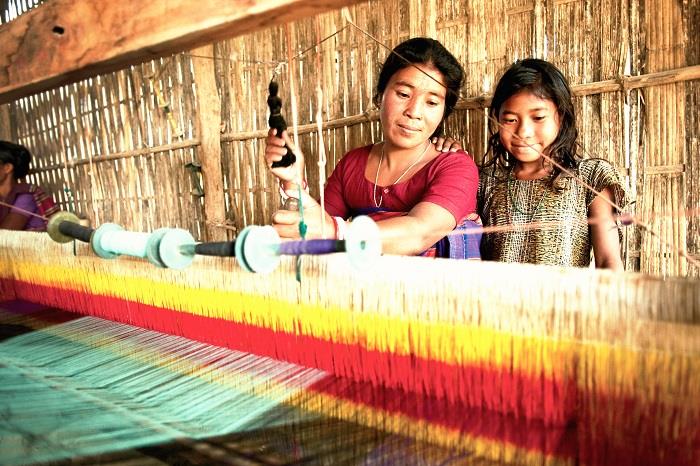
Gives trained women a dignified livelihood through handloom and artisan work — and its earnings help fund the mission itself.