“Our human compassion binds us the one to the other — in work and in love.”
Nelson Mandela
Former President of South Africa
“We can’t help everyone, but everyone can help someone.”
Loretta Scott
Philanthropist
“A warm smile is the universal language of kindness.”
William Arthur Ward
Writer
“We ourselves feel that what we are doing is just a drop in the ocean. But the ocean would be less because of that missing drop.”
Mother Teresa
Founder, Missionaries of Charity
Support-A-Girl Program Impact
Impact at a Glance
400+
Girls Supported
92%
Completion Rate
Rs 24,000
Average cost per girl per year
The Need
Why It Matters
Poverty keeps girls out of school. When a family is stretched, a daughter’s education is the first thing cut — fees, books and transport are unaffordable, and she is sent to work or married early. Her ability was never the question.
Gender inequality decides before ability does. Sons are sent to school while daughters stay home to care for siblings; a girl’s education is treated as a luxury that ends with marriage, and the cycle repeats for her own daughter.
Our Support-A-Girl program address both the causes, one girl at a time by providing quality education, safe accommodation, a progressive environment, opportunities for extra-curricular activities, vocational training, mentoring and coaching.
Program Offering
What the Program Provides
Every contribution gives a girl more than a handout. It gives her a foundation to build on, through five areas of support that have to work together.
Education
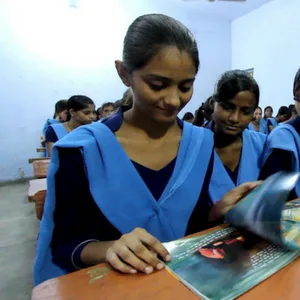
Quality Education
Schooling that does not stop at the first obstacle, from primary classes through to the board examinations.
We pay school fees and buy books, uniform and shoes. We also cover the small costs that quietly end a girl's schooling in most villages: exam fees, stationery, and bus fare she cannot ask for.
Admission is arranged directly with the school, so she starts the term beside her classmates instead of a month behind them. No cost is passed on to the family, and nothing is deducted later.
Inside school she is tracked, not just enrolled. A mentor reviews attendance every week and test papers every month, then arranges remedial classes the moment a subject begins to slip.
Teachers are met each term, so problems are heard in the classroom instead of arriving at year end as a failed result and an empty seat in the next class.
Where a girl has fallen far behind, we fund after-school teaching rather than lowering what we expect of her. Progress reaches her family in writing every term, in a form they can keep.
If she is at risk of failing a year, we say so early and pay for the extra teaching.
Most girls in the program finish Class 10 and continue to higher secondary, the first in their families to do so.
Accommodation
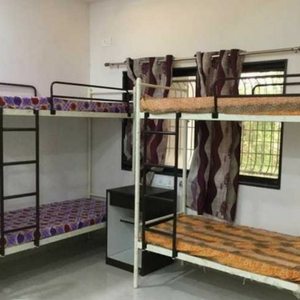
Safe Accommodation
A hostel place with a warden, a bed of her own and a routine that keeps her safe while she studies.
Distance is the quiet reason many girls never return to school after a break. Where a village is too far to travel daily, we fund a place in a partner hostel near her school.
That place includes a bed, storage for her belongings, three meals a day, electricity to study by, and a warden on site through the night. The family pays nothing for it.
The hostel is treated as part of the program, not a boarding arrangement. Our guardian visits, checks that she is eating and sleeping properly, and hears complaints before they become reasons to leave.
Parents can visit whenever they wish, and every girl goes home for the vacations. The hostel adds safety without cutting her off from the family she returns to.
Rooms are inspected termly and any complaint about food, safety or treatment is acted on within the week. Every girl is told, at the start, exactly who to speak to at night.
That name does not change during her time there. Every hostel is also visited unannounced once a term.
A safe place to sleep and study is what makes daily attendance possible for girls from the most remote villages.
Good Healthcare
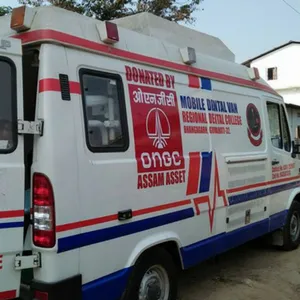
Every girl in the program gets regular check-ups, dental and eye care through camps, and treatment support when she is unwell. Costs are covered or subsidised so no family has to choose between health and school.
Where a problem needs more than a camp can give, we refer her to a specialist and follow the case until she has actually been treated, because a referral that is not completed is not care.
Environment
A Progressive Environment
A place where a girl is not the exception, and where no one tells her that school is wasted on daughters.
Half the battle is expectation. In many communities we serve, a daughter's education is treated as a loan that ends with marriage, and a girl who studies past Class 8 is quietly unusual.
Inside the program she meets older girls who sat the same examinations, women who now work, and mentors who expect her to finish rather than fade out after a year or two.
We build that expectation deliberately: group sessions on rights and confidence, honest conversations with parents about what a working daughter means for the whole household.
Mentors speak to the girls in their own language, so advice arrives in a voice they already trust. Older girls are encouraged to speak at these sessions, in front of the younger ones.
A girl who believes the classroom belongs to her behaves differently. She answers, she asks questions, and she comes back the next day even when the work has become difficult.
Confidence and expectation are planned, funded and reviewed like any other part of the curriculum.
Confidence and expectation are treated as part of the curriculum, not as a bonus when time allows.
Extra-curricular
Extra-Curricular Activities
Sport, yoga, music and celebration, because a childhood of nothing but study does not last.
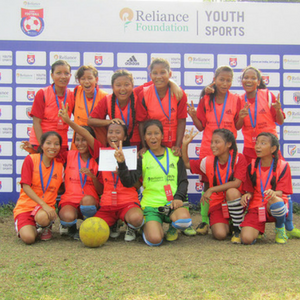
Girls supported only in the classroom often stay in the program and stop enjoying it. Sport, yoga, art and cultural events give them a reason to be at school that has nothing to do with marks.
The friendships that come with those activities are usually what keep a teenager coming back on a difficult morning, when the bus is late and the homework is unfinished.
We fund equipment, coaching and travel to competitions. Coaches are local, and the same group of girls stays together across the year, which turns an activity into a habit.
We also make a point of the occasions: festivals and sports days where families are invited to watch. Travel is funded for families who would not otherwise come.
A parent who sees a daughter receive a prize for football or recite a poem sees a future that fees alone could never have described to them.
Girls choose what they take part in, so the activities stay theirs. Those who show promise are entered for district competitions, with travel and kit paid.
These activities are funded as part of the program, not offered only when there is money left over.
Vocational
Vocational Training
Practical skills and a route to earning, so that finishing school is a beginning rather than an end.
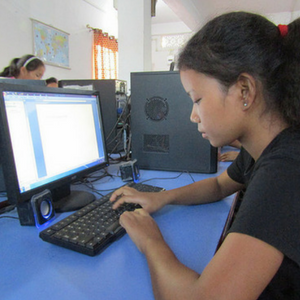
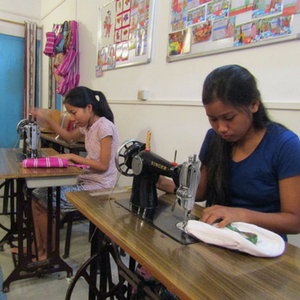
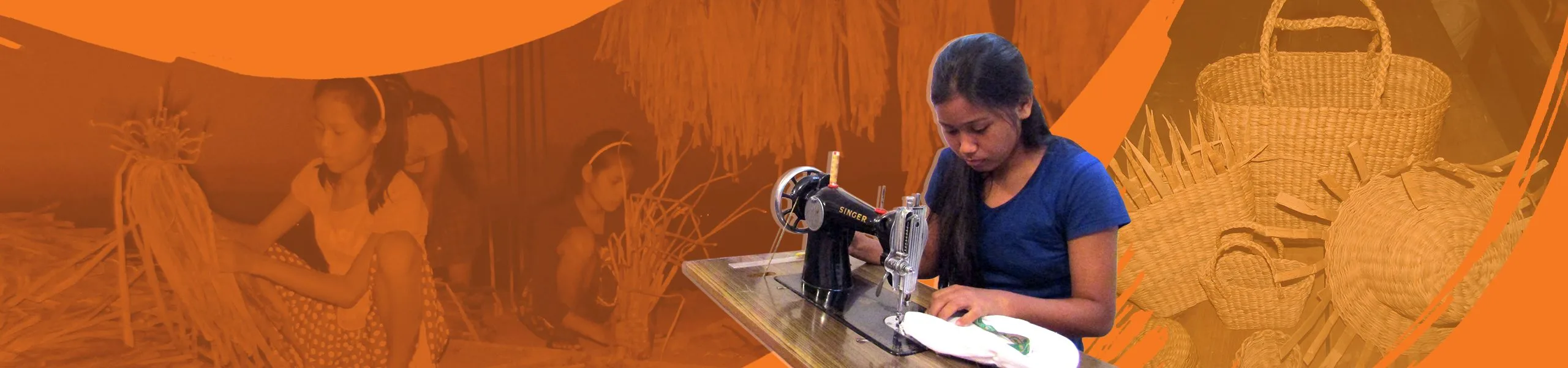
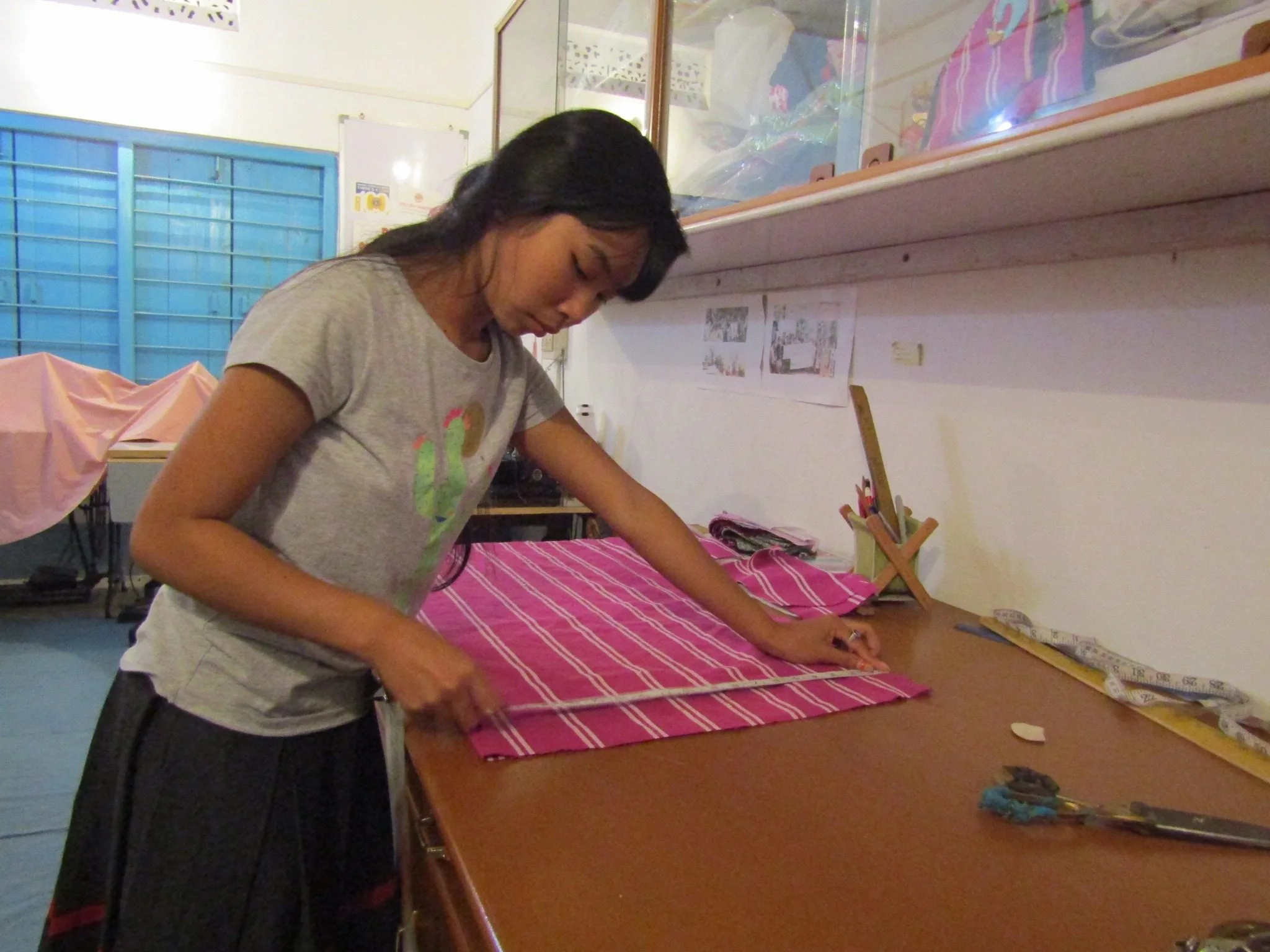
Not every girl will go to college, and a program that pretends otherwise fails the girls who will not. For those who choose a trade, we fund certified courses in tailoring, weaving, computer skills or hospitality.
Courses include the equipment, materials and travel needed to complete them, plus a stipend where a family cannot spare her wage for six months of training.
Training is paired with the parts of work usually learned elsewhere: how to price a product, keep a simple set of accounts, open a bank account, and find the first buyers.
Graduates are followed for a full year. Those who want it are introduced to the Artisans Direct marketplace, so the skill has a customer and not only a certificate.
Each trainee leaves with a small start-up kit for her trade, so the first month of earning does not need a loan from a moneylender at village rates.
Where a family objects to a trade, the guardian visits and makes the case for earning before marriage. Most objections end there, and follow-up continues after training ends.
Graduates leave able to earn, and most are supported through their first year of work or trade.
“You must be the change you wish to see in the world.”
Support-A-Girl is open to girls in the communities we already serve, and every place is assessed individually. The criteria below describe who the program is built for.
Girls aged six to eighteen from the villages in Assam where we work. Most are first-generation learners, and many would otherwise never enter a classroom.
Girls who have never been enrolled at school, or who are at risk of being withdrawn because of cost, distance, early marriage or the belief that a son should be educated first.
Families referred by a school, a community worker, or another family already in the program. A referral starts a conversation; it does not commit us to a place.
Every applicant is assessed by the program team against family circumstances, distance from school and the support available at home. Girls with no other route to education are prioritized.
A guardian is assigned before onboarding begins, so no girl enters the program without a named adult accountable for her welfare. Stage 1 of the Program Structure below explains how she is identified; meeting these criteria is not a guarantee of a place.
Girls who progress through Support-A-Girl are automatically enrolled in our Scholarship program for their higher education, so support continues without a second application. Read more about the Scholarship program.
To refer a girl or ask about eligibility, contact us.
Program Structure
How the Program Works
Support-A-Girl follows one girl from identification to independence. Fifteen steps run across three stages, and the same guardian and mentor stay with her from the first home visit to her first job.
Stage 1
Identify and Enroll
Finding the girls who need us most, and bringing their families with us.
Community identification — our field team and village families identify girls who have never been to school at all, meeting them in their homes and villages. No girl is considered too far to reach.
Risk assessment — we weigh poverty and gender inequality alongside home circumstances, family income and distance from school, so no girl is judged by one test score. Ability is never assumed from a form.
Family conversation — at the first home visit we explain what education will change, answer fears about safety, distance and cost, and agree terms before anything begins. Nothing starts without their agreement.
Baseline assessment — a mentor records her reading, writing, mathematics, health and wellbeing, so progress is measured from where she actually starts. It becomes the baseline for every review.
Onboarding — she is admitted to school, given books, uniform and shoes, placed in the hostel, and assigned a guardian who stays with her throughout. No adult works with her until safeguarding screening is cleared. Read our safeguarding policy.
By the end of Stage 1 she has a school place, a hostel bed and a guardian who will stay with her.
Stage 2
Support and Sustain
The daily work: safety, study, encouragement and a named adult who is accountable.
Guardian accountability — one named adult owns her welfare and attendance, working with her parents to keep her in school and catch any risk of drop-out early. She always knows who to call.
Family engagement — parents are invited to the hostel, keep her home during vacations, receive termly progress updates and join school events whenever possible. Visits are welcomed, not tolerated.
Learning support — a termly study plan, remedial classes where needed and weekly attendance tracking catch gaps before they become reasons to leave. Every slip is followed up within days.
Motivation — recognition for effort, peer study groups, sport and cultural events keep her connected to school and wanting to stay through difficult terms, even when the work gets hard.
Health and wellbeing — routine check-ups, nutritious meals, counseling and clinic referrals keep her well enough to learn and safe enough to stay, with a plan for anything serious.
By the end of Stage 2 she attends regularly, keeps up in class and is known by name to an adult accountable for her.
Stage 3
Progress and Transition
From school leaver to student or earner, with guidance at every fork.
Mentor to coach — a mentor supports her early years; as she enters higher grades a career coach adds subject guidance, exposure and advice about life after school, college and work.
Exam preparation — she sits practice papers through the year and receives coaching for board examinations, so the final test is never the first one she has faced alone.
Higher education — we help with applications, entrance examinations, documents and fees, and keep supporting her through the transition into college, including the first difficult term.
Pathway decision — together with her guardian and coach, she chooses the Scholarship program for further study or Skills Development for a trade, based on her results and her wishes.
Alumni tracking — we stay in touch through the first year of study or work, and she joins an alumni network that mentors the girls behind her and shares leads and opportunities.
By the end of Stage 3 she is studying or earning on her own, and still in touch with the program.
Our Impact
The Impact So Far
Since 2011, Support-A-Girl has reached more than 400 girls in the forest villages of Assam, with a 92% completion rate. These are girls who stayed in school through every grade.
The earliest girls in the program have reached college, the equivalent of fifteen years of education. They are the first in their families to do so, and the first to be asked for advice by younger cousins.
Health and safety are part of the result. Regular check-ups, nutrition and a hostel place mean no girl drops out for want of the basics, and no family loses a daughter to a preventable illness.
Parents who once saw a daughter's education as a luxury now keep her in school without being asked. That change outlasts any single girl, because it decides what happens to the next one.
Graduates move into Skills Development and toward independent livelihoods, and some return to the program as mentors. The pipeline runs in both directions, which is how a program becomes a community.
Attendance is tracked weekly, and a girl who misses a fortnight is visited rather than written off. That is why the completion rate is high: problems are found while they are still small.
We report these numbers to supporters each year, alongside the ones that did not go to plan. A program that publishes only its successes is not telling anyone the truth.
400+ girls — supported since 2011 across the forest villages of Assam.
92% completion — stayed in school through every grade, not just enrolled.
15 years — the full education span of our first graduates.
Completion, not enrollment, is the measure we hold ourselves to: a girl who finishes, not simply a girl on a register.
A Story of Change
From Garbhanga to the classroom
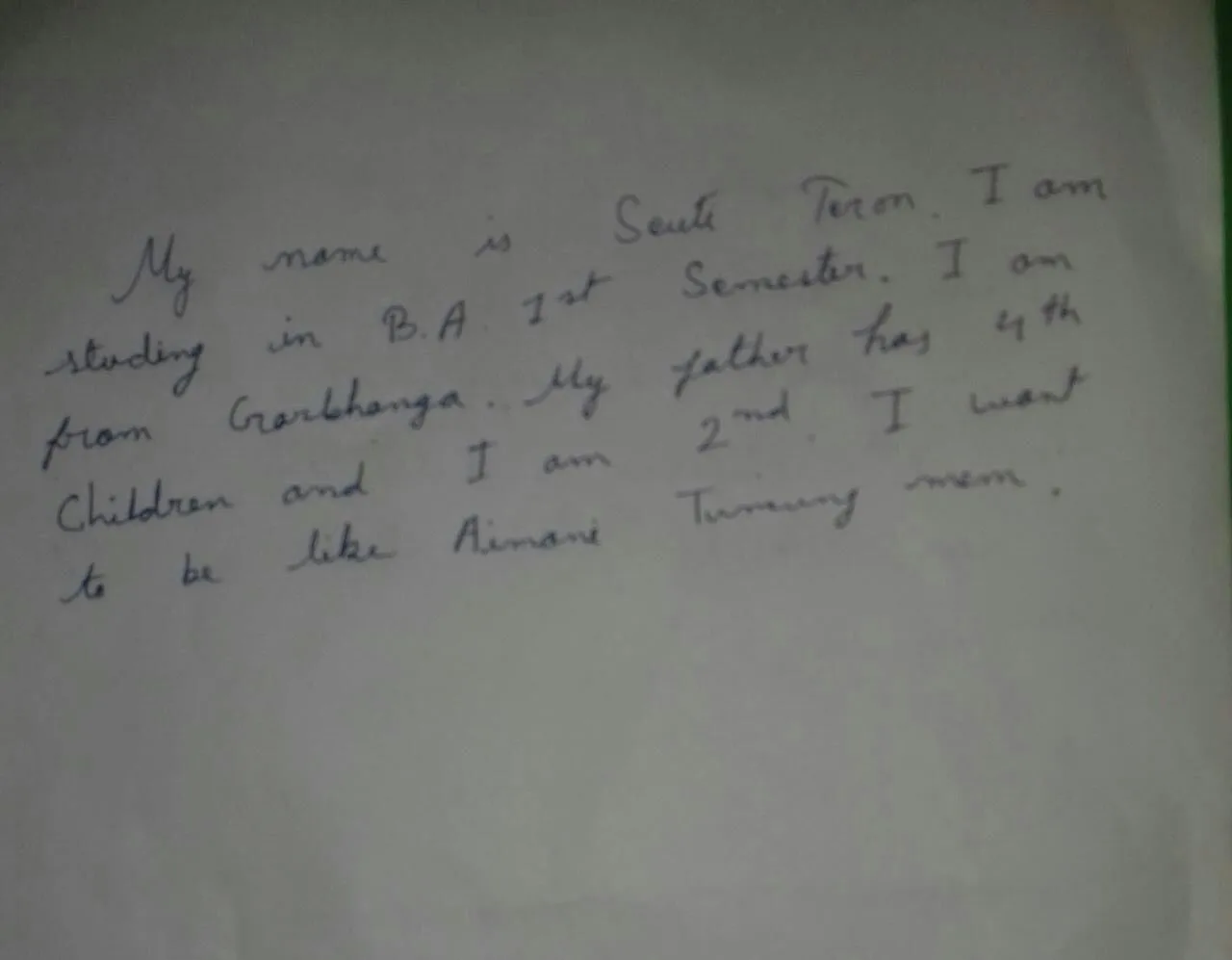
Seuti Teron joined Support-A-Girl in 2011, aged eight, from the Garbhanga Forest Reserve in Assam. She has since graduated and now works as a school teacher.
“I am thankful to Sneha Karma Foundation for providing the funding to Parijat Academy to support me and for always motivating me to become independent. I am thankful to Parijat Academy for providing me a safe accommodation and taking care of my day-to-day needs.”
Her path is the one the program is built to repeat: identified in a village, supported through every grade, coached through her board examinations, and helped into teacher training.
She was identified the way every girl in the program is identified: a field worker heard about a household where school had quietly stopped. Her parents were not opposed to education. They were counting what they could afford.
Support-A-Girl covered the fees, the hostel place and the everyday costs that end schooling in villages like hers. A guardian stayed in touch with her family, and a mentor kept her studying through the years when most girls leave.
By the time she sat her board examinations she had been coached for them for two years. The transition to teacher training was planned, funded and followed up, not left to chance.
She is one of more than 400 girls supported since 2011, and one of the first to return to the classroom as a teacher.
Focus Areas
Alignment of Programs with Focus Areas
Seven programs, three focus areas. A girl can move from her first classroom to college, then to a trade, then to a market of her own — and the two community programs work with the family and village around her.
Girls Education
Where a girl starts and how she stays, from her first classroom to a college degree.
We support underprivileged girls and women, starting in the forest villages of Assam, India. Many are first-generation learners facing poverty and gender inequality; our programs give them education, safe accommodation, healthcare, skills and a path to independence.
Our programs currently operate in India, including the Northeast, where we run education, skills and artisan-livelihood work with girls and women.
She can continue into the Girls Scholarship for higher education, or into Skills Development for vocational training — the support is designed to continue past Grade 12.
Girls aged six to eighteen in the villages where we work who have never been enrolled, or are at risk of being withdrawn. Referrals come from schools, community workers or families already in the program, and every girl is assessed individually.
School or hostel fees, books, uniform, meals, health checks and mentoring. The cost depends on the girl's age, because older girls need higher studies, and monthly sponsorship is available at several levels. We will share the current amounts when you get in touch.
US donors receive a receipt from Sneha Karma Foundation, Inc., a 501(c)(3) organization with EIN 47-3774368. For India, 80G details are available on request. Our donation policy explains receipts and refunds.
Wardens are vetted, visitors are logged and supervised, and every girl has a named guardian accountable for her welfare. Our safeguarding policy applies to staff, volunteers and hostel staff alike.
Visits are arranged through the program team and follow child-protection guidelines. Letters are welcome and are passed on through the team, so her address and personal details stay private.
Yes. Sponsors receive termly updates on attendance and progress, plus an annual summary of program results. We do not share identifying details without consent.