Education opens a mind. A skill opens a door. For an underprivileged woman, the distance between the two is often the distance between a lifetime of dependence and a life she can call her own.
Why education alone is not enough
We celebrate every girl who walks into a classroom, and we should. Education is where dignity begins. But those of us who work closely with underprivileged families have to be honest about what a certificate can and cannot do. Education alone does not create a livelihood. It can teach a girl to read, to reason, to dream — and then leave her standing at the edge of a life she is not permitted to step into.
In the villages where we work, a girl’s schooling frequently ends at the classroom door. What she needs next is not another lesson; it is a skill her own community values, and a way to earn from it without tearing apart the life she is already holding together. Without that, education remains a promise that no one ever quite keeps.
A lifetime of being told what she may do
A woman who is financially dependent — on her husband, on her parents, on the family she was born into — does not merely lack money. She lacks a voice. From the day she is old enough to be useful, she is told where she may go, whom she may speak to, what she may want, and how much she may ask for. When the money is not hers, neither is the decision about her own future.
Allowed to run its course, this dependence becomes a lifetime of control — and, far too often, of abuse. It is quiet and it is ordinary, hidden inside the routines of a household: the meal that is served but not shared, the opinion that is dismissed, the dream that is shut down before it is finished. A woman in this position is not weak. She is simply trapped in a system that has never once asked what she might be capable of.
The answer no one can give her: “just go to work”
The obvious solution — find a job outside the home — is the one solution that is almost never available to her. Her days are already full: a husband to care for, children to raise, in-laws and extended family to serve. Her time is not her own, and her decision is not her own either.
Even if she wanted to leave the house to work, her husband or her parents will not allow it, and the society around her is not ready to accept a woman who steps outside the home to earn. So when someone glibly tells her to “just find work,” it is not advice. It is a door being closed in her face. Any honest solution has to begin where she actually is — inside the life she is already living.
Change has to begin with her, in small steps
No outsider can hand a woman empowerment. It cannot be donated, and it cannot be done to her. Real change begins the moment she decides that her life can look different — and it happens in small, deliberate, baby steps. The first skill learned. The first product finished with her own hands. The first rupee that is hers to keep.
Each of those small steps does two things at once. It changes what she earns, and it slowly changes the way society looks at her — and, just as importantly, the way she looks at herself. Independence is not a switch that flips overnight. It is built, one step at a time, by a woman who has decided that she will no longer wait for permission.
What Sneha Karma Foundation decided to do
Sneha Karma Foundation understands that the path to a woman’s financial independence — and the wider social change that must accompany it — cannot be accomplished overnight. But we also believe it cannot be left unresolved. Waiting for society to change on its own is not a strategy; it is another way of asking a woman to wait.
So, within our Skills Development program, we decided to launch a project built specifically for this. We are setting up Skills Development Centres in remote villages, where uneducated, underprivileged women receive free training in skills such as:
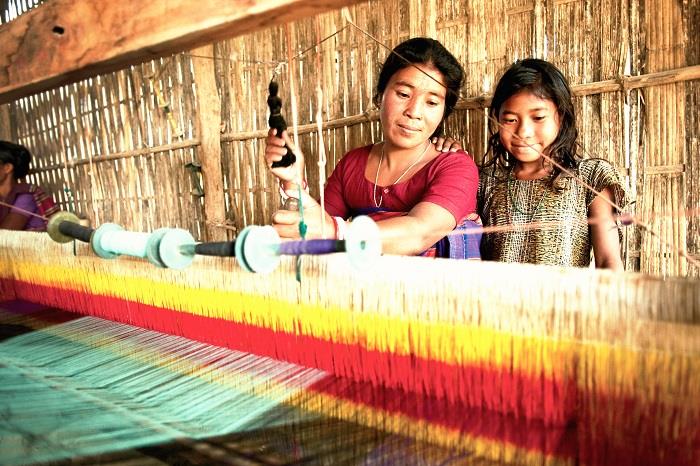
- Handloom weaving — a craft with deep roots in the communities we serve and steady demand beyond them.
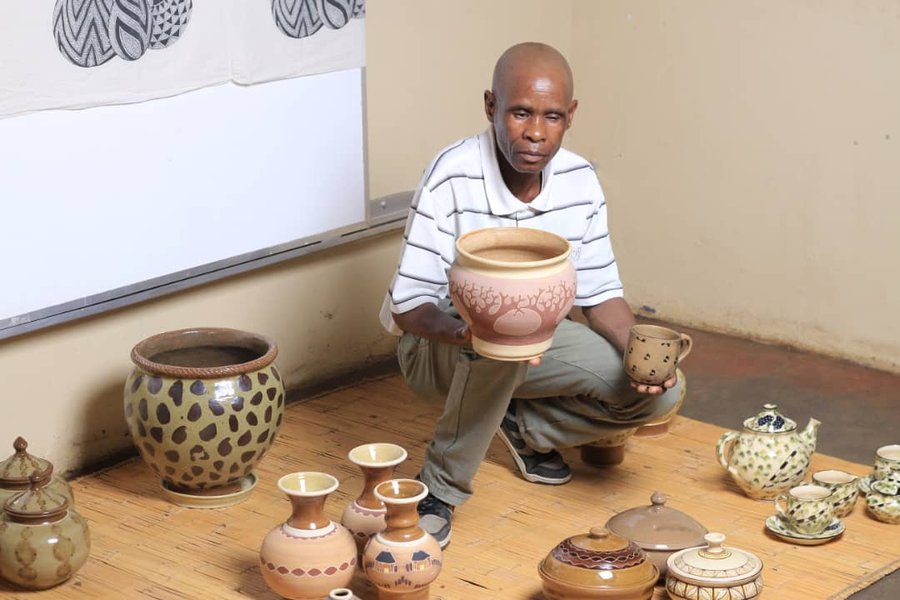
- Pottery — practical, local and endlessly renewable work.
- Other village-appropriate crafts that can be practised and sold from home.
A skill she can keep at home
Training is only the beginning. Once a woman completes her course and produces products that meet the mark, she is gifted the means of production — a free handloom, or a pottery setup — that she can install in her own home. She no longer has to travel to a workshop to work; the workshop comes to her.
Now she can produce and sell while she continues to cook, clean, and care for her children and the loved ones who depend on her. She does not have to choose between her family and her livelihood, because the livelihood fits into the life she is already living. That is the whole point: income that does not come at the cost of her responsibilities, and a small enterprise that belongs entirely to her.
The pilot: Garbhanga Forest Village
We did not want to announce a grand plan before proving it could work. So we began small, with a pilot project in Garbhanga Forest Village. The women there are exactly whom this was designed for: capable, hardworking, and long denied a fair chance to earn. The progress so far looks promising — women are showing up, learning, and producing work they are proud to call their own.
We are expecting the first batch of women to complete their training and be awarded their handlooms by March 2027. When they do, they will each carry home not a certificate, but a means of earning — something they can use every day, for years, on their own terms.
Small steps, lasting change
Financial independence is the cornerstone of that change. A woman who earns her own living stands a little taller in her own home. She can speak, and be heard. She can say no. She can see a future that she chose, instead of one that was chosen for her — and that confidence, once it takes root, cannot easily be taken away.
We know this work is slow, and we are not impatient with the pace, because we are not willing to leave it undone. One skill, one product, one small earning at a time, a woman rewrites what society expects of her — and what she expects of herself. That is how a girl who was told to wait becomes a woman who is financially independent, confident and truly empowered. And it is why Sneha Karma Foundation will keep walking beside her, one baby step at a time.