Between the founding of Sneha Karma Foundation USA in 2015 and the programs that carry our name today lie the quietest years of our story — a stretch with few headlines and a great deal of unglamorous work. Those years made the mission possible.
The part of a founding story that never makes the newsletter
Every organisation tells its story through its milestones: the day it was registered, the day a program launched, the day the first girl graduated. What those milestones hide is the space between them — the years when nothing public happened, and everything important did. For Sneha Karma Foundation, that space was 2016 and the years around it.
By July 2015, the United States entity existed on paper. What did not yet exist was a set of programs we could stand behind, a governance model that could be trusted with other people’s money, or a clear answer to the question every serious supporter eventually asks: how, exactly, will this change a life? Answering that honestly took time, and we were determined not to rush it.
Why we deliberately slowed down
There is a temptation, when you finally have a legal vehicle for your good intentions, to start spending and start promising immediately. It is a tempting path, and a dangerous one. A nonprofit that scales before it understands its work does not accelerate change; it accelerates its mistakes. Money spent on the wrong intervention, or on the wrong family, is not neutral. It can do real harm — it can raise a girl’s hopes on a promise that cannot be kept.
So we chose to slow down. We used those years to study the problem at the grassroots level: what genuinely keeps a girl in school, what actually helps a woman earn, and where the well-intentioned efforts of others had quietly failed. It was not as simple as writing a vision and a strategy. It was about understanding root causes — the compound effect of poverty and gender bias — so that our programs would answer both at once instead of treating them as separate fights.
Building the architecture of trust
A mission is only as strong as the structures that carry it. In these quiet years, a great deal of effort went into building those structures — the unglamorous machinery that lets a small foundation behave like a serious one:
Governance. A volunteer board with clear roles for strategy, finance and oversight, so that decisions never rested with one person’s good intentions alone.
Financial discipline. Clean books, documented spending, and a commitment that the overwhelming majority of every donation reaches programs — more than 90% — rather than overhead.
Program design. Piloting and refining before scaling: testing a hostel model, a skills curriculum and a mentoring approach on a small scale before asking anyone to fund them widely.
Partnerships on the ground. Working with people who already understood the villages — teachers, local leaders and schools — instead of arriving from outside with answers.
Accountability. Joining GuideStar (now Candid) and opening our work to public scrutiny, so that supporters could check our claims for themselves.
Learning from what did not work
The quiet years were also, frankly, years of trial and error. We learned that a girl can be enrolled in school and still be at risk; that a scholarship without a mentor is a cheque with no follow-up; that a skill taught without a market leaves a woman with a craft and no income. Each of these lessons was uncomfortable, and each of them shaped the programs we would eventually build.
We came to see that our role with families and communities was not to impose an outcome but to open a different way of seeing what was possible. And we came to understand that a program is not a one-time act of generosity; it is a system that has to be designed, tested, corrected and then trusted. That understanding is the single most valuable thing those quiet years produced.
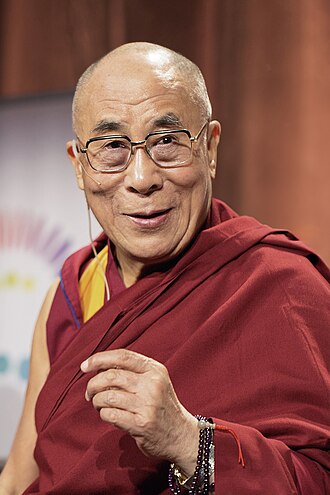
“If you want others to be happy, practice compassion. If you want to be happy, practice compassion.”
Dalai Lama
Spiritual leader
The programs that grew out of the quiet
When the work did become public, it rested on this foundation. Support-A-Girl kept girls in school and safe, covering the true costs of an education — tuition, uniforms, books, a nourishing meal — and pairing each girl with mentors who stood beside her family when pressure built to withdraw her early. Skills Development turned that education into employability, because a girl who can learn but cannot earn remains dependent. And Artisans Direct gave trained women a dignified livelihood, and the organisation a path toward sustaining itself.
None of this arrived fully formed. It was assembled slowly, corrected often, and only then offered to supporters as something worth believing in. The quiet years were not a pause in the mission; they were the mission being built.
Why the quiet years matter now
It is fashionable to celebrate speed. In our field, patience is the more valuable virtue. The structure we built in the quiet years is the reason a girl in Garbhanga can be supported from her first classroom to her first income, and the reason a donor in California can see exactly where their gift went. It is the reason we can grow without breaking.
A foundation built to last
There was another, quieter goal behind the slow pace of those years: building something that could outlast its founders. Many small nonprofits are, in practice, one person’s passion — and when that person moves on, the work fades. We wanted the opposite. We wanted an organisation with rules, records and roles, so that the mission belonged to the mission and not to any individual. A volunteer board that meets, questions and decides. Financial controls that a stranger can inspect. Program documents detailed enough that a new team could pick them up and run. None of that is exciting, and all of it is what allows a promise to a girl to survive changes in leadership, funding and fortune. The quiet years were when we built that durability, brick by unglamorous brick.
If there is a lesson here for anyone building something that matters, it is this: the work you cannot see is the work that holds everything up. Registration is a beginning, not a program. Good intentions are a beginning, not a plan. Sneha Karma Foundation used its quietest years to earn the right to be trusted — and that trust, more than any milestone, is what has let the mission endure.