
Good intentions are cheap; good programs are expensive and hard. Between 2015 and 2018 we learned that the difference between helping and actually changing a life comes down to design — to how carefully a program is built, tested, and corrected before it is trusted with a girl’s future.
The trap of the well-meaning intervention
In this field it is dangerously easy to do something that feels helpful and changes nothing. Buy uniforms and the uniforms are worn out in a year. Pay fees and the girl still drops out in grade nine. Run a training course and the graduates still have no income. Each of these interventions looks like progress on a report and is, in truth, a missed opportunity — because the help stopped short of the outcome that matters.
At Sneha Karma Foundation we came to a difficult conclusion during these years: the failure is usually not in the intention but in the design. A program that is built without understanding the whole life of a girl will help only with the piece it happens to address, and the pieces it ignores will undo its work. Real impact requires designing for the entire journey, not for a single gesture.
Designing for the whole girl, not a single need
So we redesigned around a girl’s whole life. If she is to stay in school, the true costs of staying must be covered — not just tuition, but uniforms, books, stationery, and a nourishing midday meal so that hunger never competes with learning. If her school is far, she needs a safe place to live, because the journey itself is one of the most common reasons a daughter is kept home. If her family is under pressure to marry her early, she needs mentors who will work with that family, respectfully and persistently, rather than simply lecturing them.
That is the design behind Support-A-Girl: education plus safety plus nutrition plus mentorship, held together by people who know each girl by name. It is more expensive and slower than writing a cheque for fees. It is also the only version that works.
Education alone is not enough — designing for livelihood
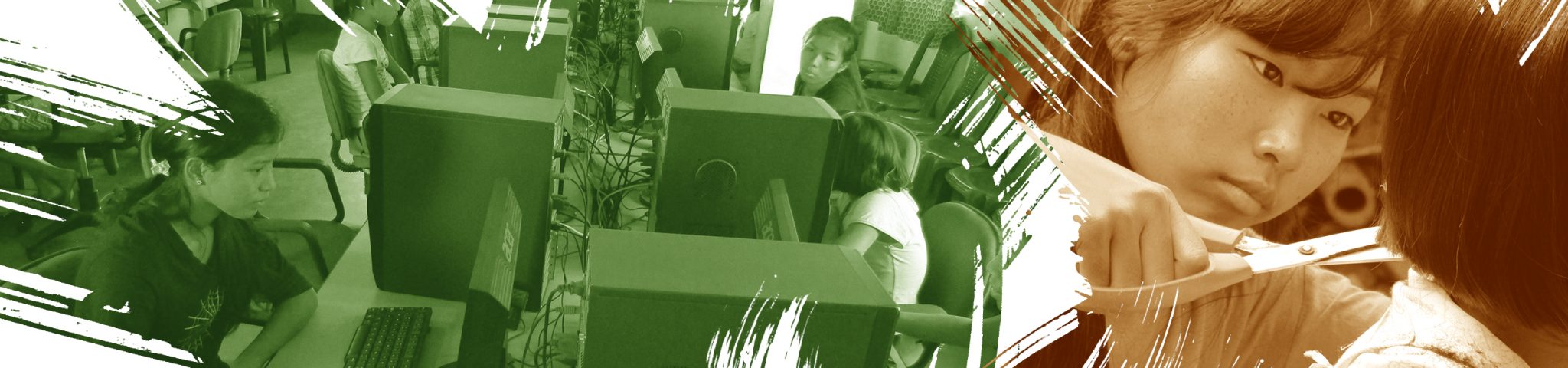
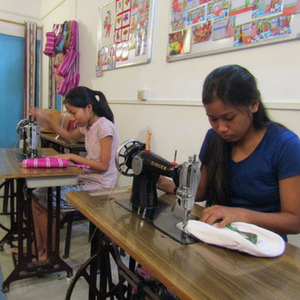
The second design lesson was harder. We watched girls finish school with real ability and then stop, because the road ahead had no bridge. A young woman who can learn but cannot earn remains dependent, and dependence undoes much of what an education was meant to achieve. So we began designing not only for schooling but for livelihood: vocational training, computer literacy, and apprenticeships matched to what employers actually need, rather than to what a curriculum finds convenient to teach.
We learned that a skill without a market is a hobby, not a livelihood. Training a woman to make something beautiful is only half the design; the other half is making sure there is a buyer, a price that respects her work, and a fair market where it can be sold. That is why our thinking moved toward an integrated approach — training, tooling, micro-loans, and market access — where each piece supports the others. Artisans Direct, which gives trained artisans interest-free loans and fair marketplaces, grew out of exactly this understanding.
The design principles we settled on
Out of these years of testing and correcting, a set of design principles emerged that now guide every program we build:
- Design for the whole journey. Find the points where a girl is most likely to drop out — money, distance, marriage, the last mile of college — and build support at each one.
- Complement, do not duplicate. Where government schemes and other sponsorships already exist, fill the gaps they leave rather than reinventing what they provide.
- Attach a person, not just a payment. Every girl gets a mentor or coach, because accountability and guidance are what turn funding into a finished outcome.
- Earn it and keep it. Strict entry and continuation criteria, so that support is sustained by effort and every rupee produces a real result.
- Measure what matters. Track retention, completion and income outcomes, not just enrolment, because enrolment is the beginning of the story and not the end.
- Test small, then scale. Prove a model on a small scale before asking supporters to fund it widely.
One more principle deserves its own mention: patience. Good design accepts that change is slow. A program built around a girl’s whole childhood cannot be judged in a single grant cycle, and a livelihood cannot be rushed into profitability. We have learned to measure progress in years, not weeks, and to keep supporting a model long enough for it to prove itself. Impatience is one of the quiet reasons good programs fail: they are abandoned just before they would have worked. Designing for the long run, and staying with it, is part of the design itself.
Why design is a form of respect
It would be easy to frame all this as a technical exercise. But good design is also a moral choice. When we build carefully, we are saying to a girl and her family that we take her future seriously enough to get the details right. We are refusing to raise her hopes on a promise we have not thought through. And we are honouring our donors, whose generosity deserves to be turned into outcomes rather than activity.
The discipline of saying no
Good design also means knowing what not to do. In these years we learned to decline opportunities that looked attractive but did not fit our mission: a program that would spread us thin, a partnership that would compromise our focus, a quick win that would not lead anywhere durable. Saying no is hard for an organisation that wants to help everyone. But a foundation that tries to do everything does nothing well, and the cost of scattered effort is paid by the girls whose support becomes inconsistent. We chose a narrow lane — underprivileged girls and women, education and livelihood, in the villages we know — and we have tried to stay in it. Focus is not a lack of ambition. It is the only way a small organisation can produce outsized change.
Looking back, the years we spent designing were not time lost. They were the difference between a foundation that does nice things and one that changes lives. A girl does not need our sympathy; she needs a program that anticipates every obstacle between her and independence and removes them, one by one. That is what we set out to build — and what we continue to refine, because good program design is never finished.