Between the first wide-eyed visit and the conviction that became our mission lay a quiet, stubborn few years of asking better questions. This is what those early trips into the villages taught us — and why they convinced us that education alone would never be enough.
The desire to give back, and the years it took to act on it
Almost everyone carries a wish to give something back — to the community, to a place, to people who had less than we did. The hard part is rarely the wanting. The hard part is turning that wish into action. We get trapped in something called “life,” and the desire lives quietly inside us as a wish, waiting for the day we finally make it a priority.
For me, that day came around 2008. Even then, it took more than three years to move from intention to real action. During those years I was trying to work out what I could genuinely give, and where it would matter most. It was not as simple as writing a vision, a strategy and a set of metrics. It was about understanding problems at the grassroots level — what the root causes actually were, and who was left behind when no one was watching. The villages of Assam became my classroom for exactly that kind of learning.
Peru, and the first clue
My own action started with a volunteering assignment through International Volunteering HQ (IVHQ), in Cusco, Peru, in 2011. I chose a destination close to “nature” rather than the material world, and I signed up to teach. On the first day, I walked into a room containing children as young as eight and adults as old as forty-five. I was puzzled for a moment — and then it hit me: learning has no age limit.
My students were learning conversational English because they worked as tour guides by day and needed the language to do their jobs well. It affected their livelihoods directly. Somewhere deep inside me, a seed was sown that day: having the required skills can matter as much as — sometimes more than — academic education. A person can be bright and hard-working and still be held back for the simple lack of a practical ability no one taught her.
Into the villages
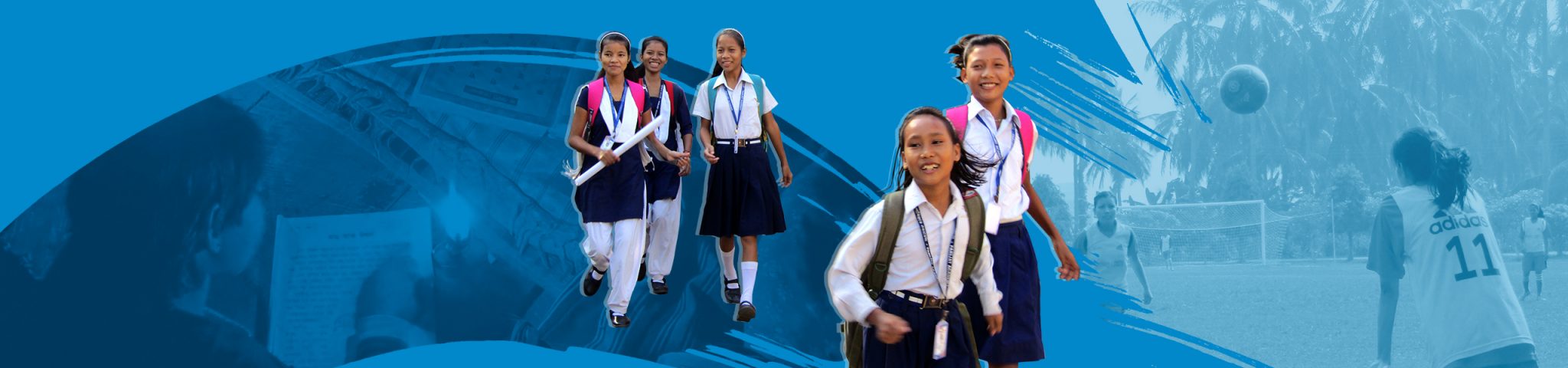
When I eventually reached the villages around Garbhanga in Assam, the contrasts with Peru were obvious, but the underlying pattern was the same. Here, too, people were capable and eager to learn. Here, too, the missing piece was opportunity — a skill, a safe place to study, someone to open a door. But there was one difference that would shape everything: in these forest villages, the person most likely to be denied that opportunity was a girl.
On the early visits, what struck me was not the poverty itself — though it was real and severe — but how the poverty interacted with belief. When money is short, it is almost always the girl who is pulled out of school first. She is kept home to help with chores, because learning household work is thought to raise her value in the marriage market. Her brothers are educated first, because a son’s schooling is treated as an investment while a daughter’s is treated as a cost that will walk away into another family.
“Help one girl and you help the family she will one day hold up.”
Sneha Karma Foundation
Impact
The realization: a school place is not enough
Trip after trip, I watched the same story repeat. A girl would begin school, sometimes do well, and then stop — not because she lacked ability, but because the world around her had decided her future for her. Distance, safety, cost, and above all the expectation that she would marry and leave: each of these could end an education that had barely begun. We could pay fees and buy books, and we did. But the moment a girl went home, she re-entered a set of beliefs that quietly told her she was worth less than a boy.
That is the realization the early village visits forced on us. Education alone does not change a girl’s life if the family and community around her still see her as a burden. We could keep her in a classroom, but we could not keep her in the world if the world did not believe in her. Belief comes before everything — before the classroom, before the skill, before the income.
Listening, not assuming
The other great lesson of these early years was the importance of listening. It is tempting, when you arrive with resources and good intentions, to decide what a community needs and then deliver it. The village visits taught us humility instead. We sat in homes, drank tea, asked questions, and heard families explain their choices in their own words. Very often the choices that looked cruel from outside were the choices of people with almost no margin for error. Shaming them would have changed nothing. Listening began to change something.
We learned that a change which is imposed does not last, and a change a community chooses for itself does. We learned that the people caring for these girls — their mothers, grandmothers, and sometimes fathers — were not the enemy; they were the key. And we learned that progress happens in small, deliberate steps: one family persuaded, one girl kept in school, one household that begins to see a daughter differently.
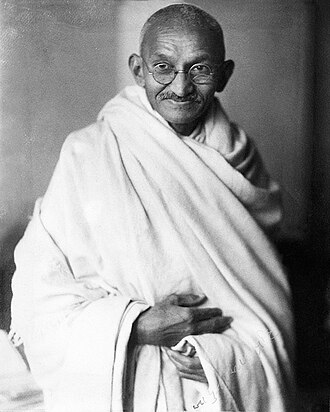
“The simplest acts of kindness are by far more powerful than a thousand heads bowing in prayer.”
Mahatma Gandhi
Leader of the Indian independence movement
From visiting to building
By the time these first visits were behind us, the shape of the work had begun to emerge. If belief came first, then a program had to work on belief. If whole support mattered, then a girl needed more than a fee — she needed a bed, meals, healthcare, mentorship and a safe place to live and learn. And if the problem was systemic, then it could not be solved by kindness alone; it needed structure, patience and persistence.
Those convictions would later be formalised: in the accommodation and mentoring of Support-A-Girl, in a Skills Development centre that turns learning into a livelihood, and above all in the decision to make Social Change the foundation of everything we do. But all of it began here, in the villages, long before there was an organisation to carry it.
What the first village visits still teach us
Looking back on those early years, the lessons remain remarkably current. Go and see for yourself. Problems are never as simple as they look from a distance, and solutions are never as simple as they look on paper. Support the whole child. A bed and a meal and a mentor are not extras; they are what make an education possible at all. Change the belief or nothing changes. And move in small steps, but never stop. The path to a girl’s independence and to a community’s change cannot be walked overnight — but it also cannot be left unresolved.
That is the bridge from those first visits to the conviction we hold today. We did not set out to build an institution. We set out to understand why so many girls were being left behind — and the villages answered, patiently and honestly, one household at a time.