
Educate a girl and you change her life. Change what her family and her village believe about girls, and you change every life that comes after her. For fifteen years, that second and harder truth has quietly shaped everything Sneha Karma Foundation does.
A truth we could not look away from
Fifteen years in the forest villages of Assam have given Sneha Karma Foundation something more valuable than statistics: a real education in how poverty works. We have sat in homes where a daughter eats last and is called first. We have watched mothers, raised to accept it, quietly pass the same arithmetic on to their own daughters. Over time we reached a conclusion that now shapes everything we do — no program, however well funded, can outrun a belief system that tells a girl she is worth less than a boy. That belief is the root. Until it changes, nothing else truly changes.
The situation: the lowest priority, the helper, the liability
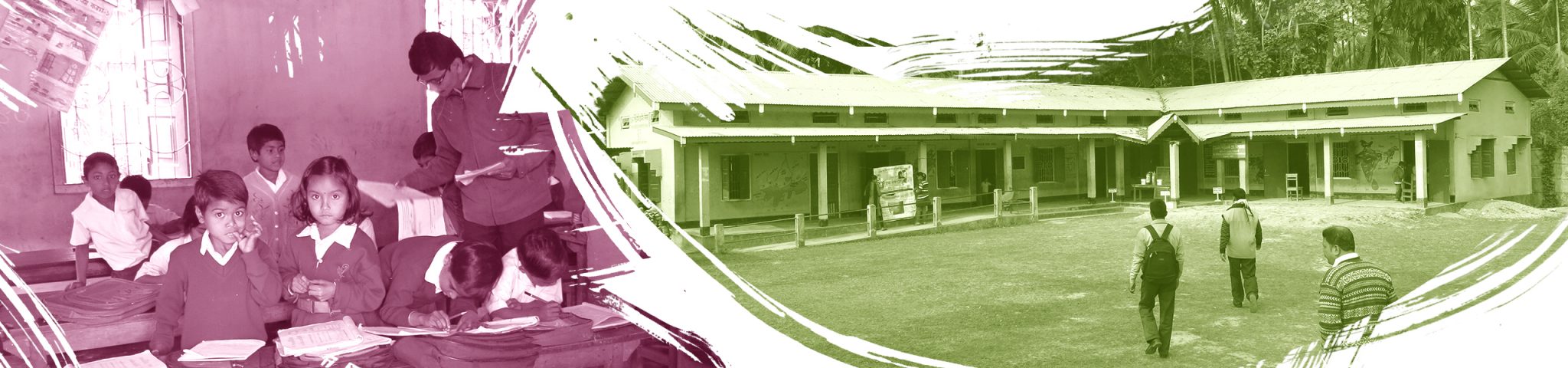
In a poor household, a girl is rarely treated as the future. She is the helper: the one who fetches water, minds the younger children, cooks, cleans and cares for the elderly while her brother studies. She is also, in the family’s anxious accounting, a liability — a mouth to feed now and a dowry to pay later. So when there is only enough money to educate one child, the choice is made without much debate, and she is the one who steps back. Not because she is less capable, but because she was never counted as equal in the first place.
The complication: a lesson she is taught about herself
The deepest harm is not only in what is denied her; it is in what she is taught to believe about herself. Day after day the message is repeated: that she is inferior to her male counterpart, that her worth lies in her body, that she was born only to give birth to a child and continue the family line. She is married off early — often before she is ready — and told that motherhood is her purpose, so the cycle begins again almost before it has ended. Slowly, she internalises it. Long before she is old enough to question it, she has been convinced that it is true. The strongest barrier to a girl’s future is not a locked door; it is the belief planted in her own mind that she does not deserve to walk through it.
The implication: when poverty becomes a predator
A girl with no voice at home has even less protection outside it. Where poverty is extreme and a daughter is seen as a burden, the most vulnerable are sold, trafficked or simply disappear — sometimes at the hands of strangers, sometimes at the hands of those who were meant to protect them. Child trafficking is not a distant horror; it grows in the same soil as child marriage, and both are fed by the same belief that a girl’s life is worth less than a boy’s. Put those facts together and the picture becomes clear. We are not merely failing individual girls; generation after generation, we are building a society that keeps failing them.
Our position: Social Change is the foundation, not an add-on
Our Founder Member saw this with painful clarity, and it changed how Sneha Karma Foundation understands its own work. It became obvious that social change could not sit politely beside our other efforts as one focus area among several. It had to become the foundation beneath all of them. Our position is firm and simple: a girl’s future must never be decided by her gender or by the accident of her birth — and the beliefs, customs and fears that decide it must be challenged as deliberately as we challenge poverty itself.
The action: Social Change designed into everything we do
So we made a decision. At SKF, Social Change is not only a focus area; it is an element woven into the design of every other focus area, initiative and program. Support-A-Girl does not merely pay a girl’s school fees — it works with her family so that keeping her in school becomes a matter of pride rather than argument. Skills Development does not merely teach a trade — it places a woman’s earning in her own hands, so that she stops being a liability and becomes a contributor, and the neighbours who watch her succeed begin to rethink what a girl can become. Our Scholarship Program carries the same idea: support is paired with a dedicated mentor and with the family, so that studying is understood and defended by the people around her.
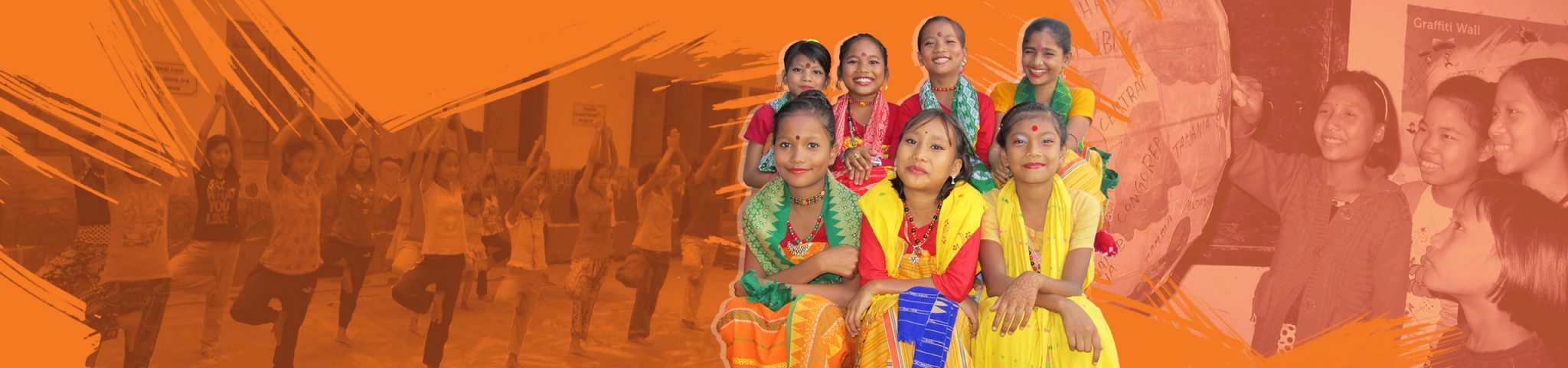
In every program — Girls’ Education, Women’s Livelihood, Support-A-Artisan, Nayi Soch — we ask the same quiet question at the design stage: will this change not only what a girl can do, but what people believe she is worth? If the answer is no, we redesign it until the answer is yes.
The benefits we foresee
We do not expect applause in a season. But we know what a deliberate focus on social change produces over time:
- Girls who know they matter — children raised to believe their ambitions are legitimate, not selfish.
- Families that choose differently — parents who keep a daughter in school not because a charity asks, but because they have come to want it.
- Communities that protect — villages that treat child marriage and trafficking as a shame to confront, not a custom to keep.
- Earning women, changed households — a woman with her own income is heard differently at her own dinner table and in her own village.
- Change that sustains itself — once a community believes in its daughters, that belief no longer needs our funding to survive. It becomes culture.
Slow by design, never left unresolved
Social change of this kind cannot be accomplished overnight. Beliefs that took generations to build will not fall in a single season, and we would be dishonest to promise otherwise. But it also cannot be left unresolved. So we move in small, deliberate steps — one family persuaded, one girl kept in school, one woman earning with dignity, one village that begins to see her differently. That is how societies change: not with a single grand gesture, but with thousands of quiet ones, repeated until they become normal. At Sneha Karma Foundation, that is not a side effect of our work. It is the work.