In March 2019, we opened the Garbhanga Handloom and Handicraft Centre with a simple conviction: that a woman should not have to choose between caring for her family and earning a living. Five years on, the looms are still moving — and so are the lives around them.
Why a handloom centre at all
Sneha Karma Foundation’s work had always begun with education. Support-A-Girl kept girls in school, and that is essential. But in the villages, the question kept returning: what happens after? A young woman might finish her schooling and still be unable to earn, and a woman who cannot earn remains dependent — on a husband, a father, a family that may not value her equally.
We also understood something about the reality these women live in. It is not possible for a woman who is financially dependent, and who spends her days caring for a husband, children and extended family, to simply leave home and go to work outside. Her family will rarely allow it, and the society around her is not ready for it. Change has to come in small baby steps. So instead of asking women to leave home for work, we decided to bring the work to them.
The opening: March 2019
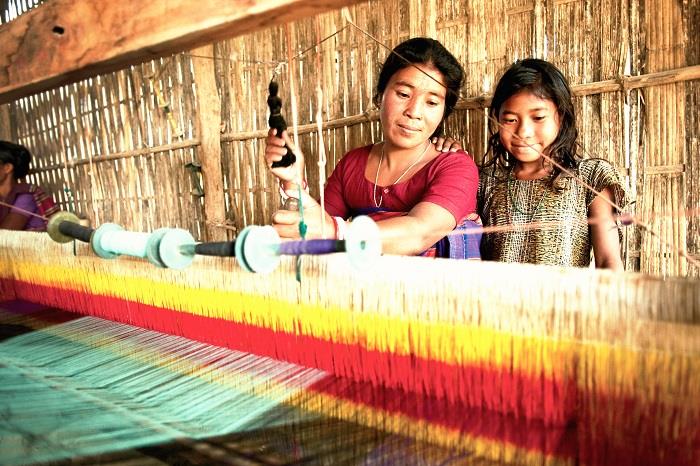
On the ninth of March, 2019, we inaugurated the Garbhanga Handloom and Handicraft Centre — a place where women from the villages around the forest could come and learn a skill that would eventually earn them an income. The centre was not built around a handout. It was built around training: a place to learn weaving and handicrafts properly, with the tools and the guidance to do it well.
The idea was deliberately practical. Learn a real skill. Make a real product. Find a real market. And, crucially, do all of it in a way that fits the life a woman actually leads — responsibilities at home, children to raise, elders to care for. The centre was never meant to pull women away from their families. It was meant to give them something of their own within the lives they already have.
What happens inside
Inside the centre, the work is unglamorous and beautiful in equal measure. Women learn to set up and operate a handloom. They learn the patience of weaving, the discipline of consistency, and the pride of making something with their own hands that someone else will pay for. Alongside the craft, they gain something subtler and perhaps more important: a place of their own, a set of peers, and a reason to believe that their abilities are worth money.
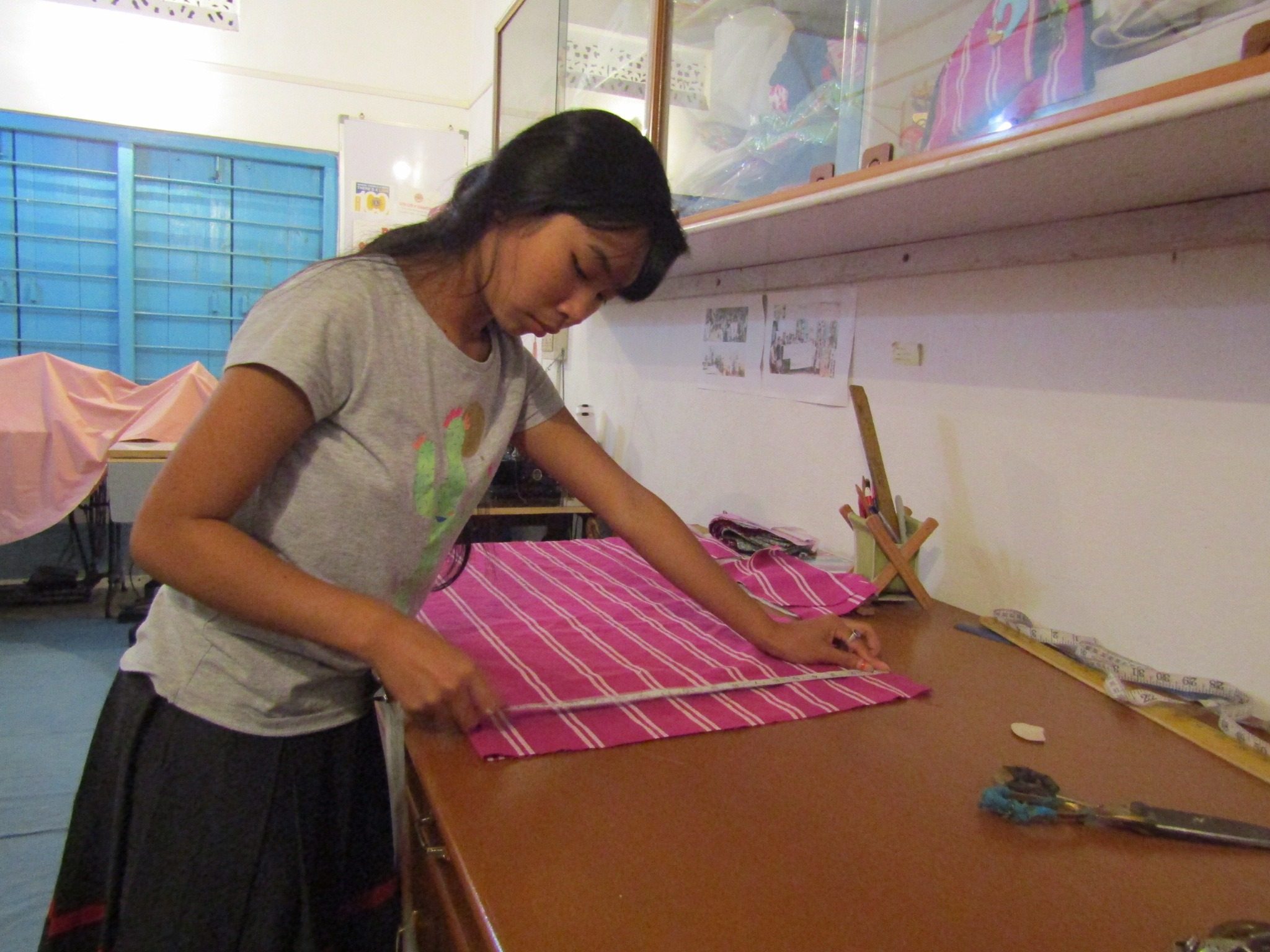
And when a woman completes her training and produces marketable products, we do not simply congratulate her and send her on her way. She is gifted a free handloom or pottery setup that she can install in her own home — so that she can keep producing, and keep earning, while she cooks, cleans, and cares for her children and loved ones. The work fits around her life instead of demanding she abandon it.
The economics of dignity
There is a hard economic logic underneath the beauty of handloom. A woman who earns her own income is no longer a liability in the household’s accounting; she is a contributor. That single change alters how she is treated at her own dinner table and how she is seen in her own village. It gives her a voice in decisions about her children, her health and her future. Financial independence is the cornerstone of a woman’s confidence, and confidence is the beginning of empowerment.
The centre also feeds into the larger ecosystem we are building. Products made by these women can travel through our social enterprise, Artisans Direct, which gives artisans interest-free loans and a fair marketplace, so that a woman who can make something beautiful can also sell it at a price that respects her work. Training, tooling and market access are designed to work together, because a skill without a buyer is only a hobby.
Five years in: what we have learned
Five years is long enough to be honest. The centre has done what we hoped in some ways, and taught us hard lessons in others. On the hopeful side, women have learned real skills, and some have begun to earn. The model of training at a centre and then producing at home has proven to fit village life in a way that a conventional job never could. And perhaps most importantly, the centre has begun to shift what people believe is possible for a woman — slowly, in the way that beliefs actually change.
On the harder side, we have learned that training alone is never enough. Markets have to be built patiently. Quality has to be consistent. Income takes time to become steady, and families need support to keep believing in the work during the lean early months. Turning a skill into a stable livelihood is a longer road than we first imagined — and it is a road we are still walking.
Why we stay with it
We stay with it because the alternative — a woman who spends her whole life dependent, and therefore vulnerable — is unacceptable. The path to a woman’s financial independence and to genuine social change cannot be accomplished overnight. But it also cannot be left unresolved. So we move in small, deliberate steps: a woman trained, a loom installed, an income begun, a household that starts to see her differently.
Beyond the loom
The centre was never only about handloom. Weaving and pottery are the vehicles; the destination is a woman who sees herself differently. Every woman who learns a skill and earns from it becomes, in her own household, evidence that a daughter is not a burden but a contributor. Those women become role models for the girls we send to school, showing them what an education can eventually build. In that sense the handloom centre and our education programs are two ends of the same promise: that a girl can learn, and that a woman can earn. Neither half is complete without the other, and seen together they are how a family, and slowly a village, begins to change what it believes about its daughters.
Five years into the handloom centre, those steps add up to something real. There are women in Garbhanga who now make things that sell, who contribute to their families’ income, and who have a standing in their homes that they did not have before. Each of them is a small act of social change, quietly rewiring what a village believes a woman can be. That is the work. And we are only getting started.