
The pandemic year asked a hard question of every organisation that serves the poor: when the world stops, do you stop too? For Sneha Karma Foundation, 2020 was the year we learned that showing up in a crisis is not a distraction from the mission — it is the mission.
When everything closed at once
For those of us fortunate enough to work from home, the pandemic was a disruption: confined rooms, endless video calls, a strange new rhythm of life. For the communities Sneha Karma Foundation serves, it was something categorically different. It was the sudden loss of the ability to earn a living at all.
Imagine being told to stay home when home is a single room, when there are no savings, and when the daily wage you depend on has vanished. Imagine having little children to feed and elderly parents who need medicine, and no way to put food on the table. The lockdowns that protected the comfortable from a virus exposed the vulnerable to something almost as dangerous: hunger, and the desperation that follows it.
In the forest villages around Garbhanga, families who already lived close to the edge were pushed over it. Schools closed. Markets closed. Work disappeared. And every one of the risks we spend our days fighting — child labour, early marriage, trafficking, girls pulled out of school — grew sharply in the shadow of a family’s need to survive.
The situation: a crisis of survival, not convenience
We have to be honest about the difference between inconvenience and catastrophe. Being locked in and forced to work from home is one thing. Being unable to earn a livelihood, with no savings and no safety net, is something else entirely. For many of the families we serve, a week without work meant a week without food. The virus they feared was real; the hunger in front of them was certain.
What worried us most was what hunger does to the choices a family makes about its daughters. In a crisis, the education of a girl is the first thing sacrificed. She is kept home to help. She is sent to work for whatever she can bring in. The pressure to marry her early — removing a mouth to feed — becomes almost irresistible. We knew that if we did not act, the pandemic would cost girls not just a year of school but sometimes their entire futures.
Our response: rations, and staying present
Thanks to the generosity of our supporters, Sneha Karma Foundation was able to provide rations to the villagers of Garbhanga — more than once — during the worst months of the pandemic. It was not enough. It was never going to be enough, and we will not pretend otherwise. But it was something real, delivered to families who had nowhere else to turn, at a moment when even the neighbours who normally help were themselves in trouble.
Many other organisations joined hands during those months, and collectively we did the best we could. That collective response mattered. No single foundation, ours included, could meet a need that large alone. What we could do was refuse to disappear — to keep our relationships with the villages alive, to keep checking on the families we serve, and to make sure that the girls we had worked so hard to keep in school were not quietly forgotten while the world reeled.
Keeping learning alive when schools were shut
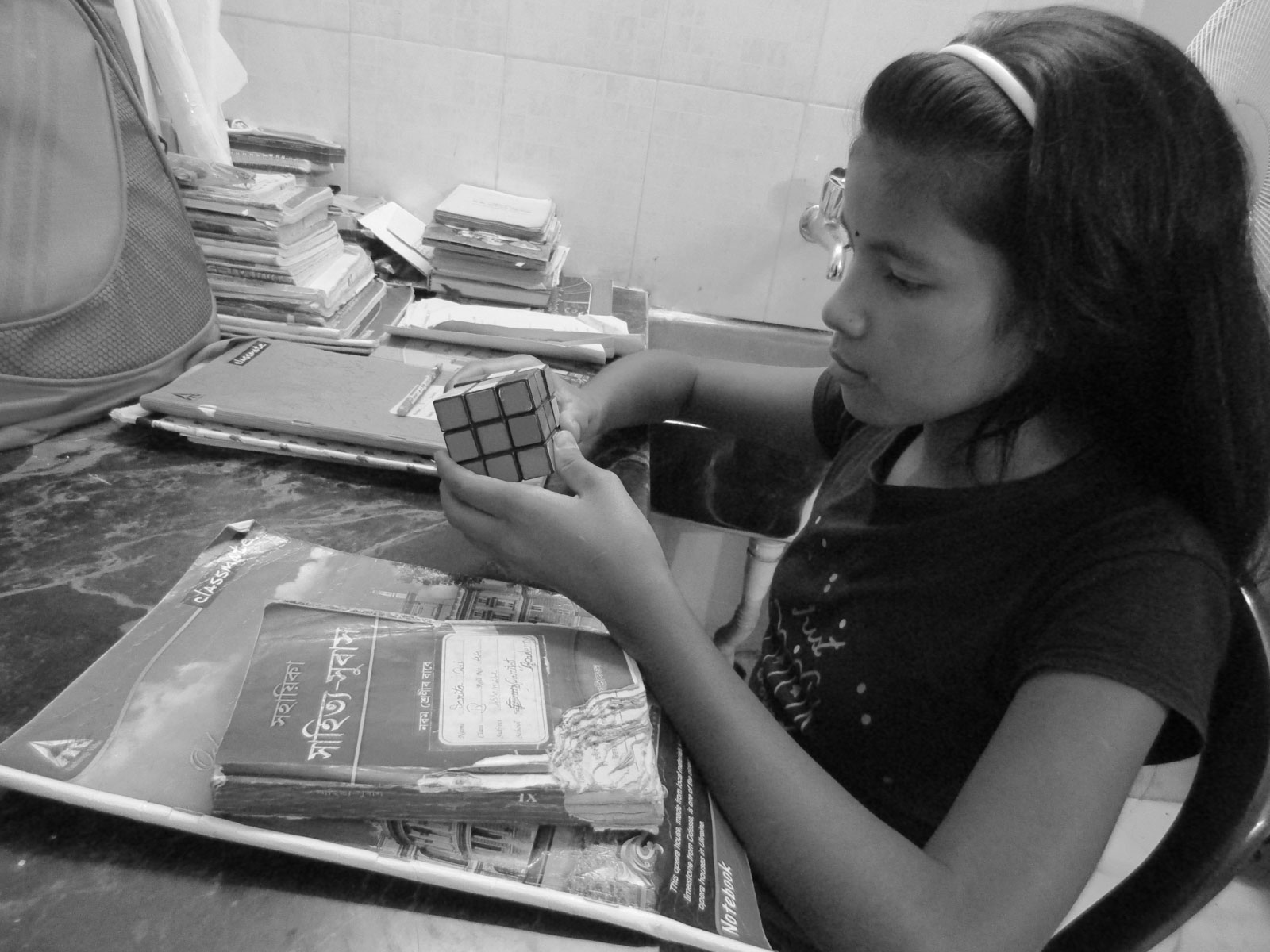
Food was the emergency. But we also knew that a girl who stops learning for a year may not come back. So we stayed in touch with families, encouraged learning at home wherever possible, and focused on the simplest and most powerful protection we had: keeping the relationship intact, so that when schools reopened, our girls would be in the room.
This is the quieter, less visible work of a crisis. It does not photograph well. It is phone calls and check-ins, gentle persuasion and practical help. But it is often the difference between a girl who returns to school when the storm passes and one who never does.
What the year taught us
The pandemic clarified several things we now take as permanent lessons:
- Presence is a form of protection. In a crisis, simply staying in touch with families can be as important as material aid, because it keeps a girl visible to people who care about her.
- Emergency response is mission work. Rations and relief are not a sidetrack from girls’ education; they are what makes education possible again on the other side.
- Crises deepen inequality. The same shock that inconveniences the comfortable devastates the poor, and it falls hardest on girls, whose futures are treated as the most expendable.
- Resilience must be designed in. Support that vanishes when a shock hits is not really support. We have to plan for hard seasons, not just good ones.
Why we did not stop
There were moments in 2020 when it would have been reasonable to pause our regular work and wait for the world to recover. We chose not to, because the girls and families we serve could not pause their need. A pandemic does not suspend poverty, and it does not suspend the belief that a daughter is less valuable than a son. If anything, it strengthens both.
The girls who did not come back
We should be honest about the cost of the pandemic year. Not every girl we had supported returned to school when the schools reopened. Some moved away with their families. Some were married early, their education ended by a crisis that made a daughter look like a burden once more. Others simply drifted, and despite our efforts we could not always bring them back. Each of those girls is a reminder that a year lost is not neutral in a life like theirs. It can be the difference between a future and a foreclosed one. We hold that loss honestly, because it is why we work the way we do — staying close, staying present, and refusing to let a girl disappear quietly from our care.
So we did what small organisations with committed supporters can do: we showed up, we helped where we could, and we stayed connected to the people who depend on us. Looking back, the year the world stopped was the year we proved what we are made of. Our supporters’ generosity reached families who had nothing, at the worst possible moment. That is what a community of care looks like — and it is the reason we are still here, still working, still keeping our promises one girl at a time.